



From Figma to Live Website: Bridging Design and Code
Learn how modern tools convert Figma designs directly into responsive, production-ready websites with pixel-perfect accuracy.

Sarah ChenHead of AI ResearchOct 15, 20248 min read

Introduction
The landscape of software engineering is undergoing a monumental paradigm shift. For decades, the process of bringing a digital product to life required a highly orchestrated sequence of design files, engineering handoffs, manual testing, and complex deployments. Today, autonomous AI agents are consolidating these steps into a continuous, interactive loop.
Rather than functioning as simple autocomplete tools, modern AI agents analyze high-level objectives, architect databases, implement complex APIs, and continuously iterate on frontend experiences based on real-time feedback. This transition from static code generation to active product engineering is redefining developer velocity.
The Rise of AI-Powered Development
At the core of this transition is natural language processing combined with context-aware execution. Platforms like AgentX allow developers and founders to describe a product, dashboard, or service in plain English. The underlying agent then breaks down that prompt into discrete tasks, establishing a modular engineering plan.
This democratizes the construction process. Teams can validate MVPs in a matter of hours rather than months. Because the system manages the complex pipeline of translation from user design tokens to clean, compiled code, creators can focus entirely on refining the user experience and business logic.
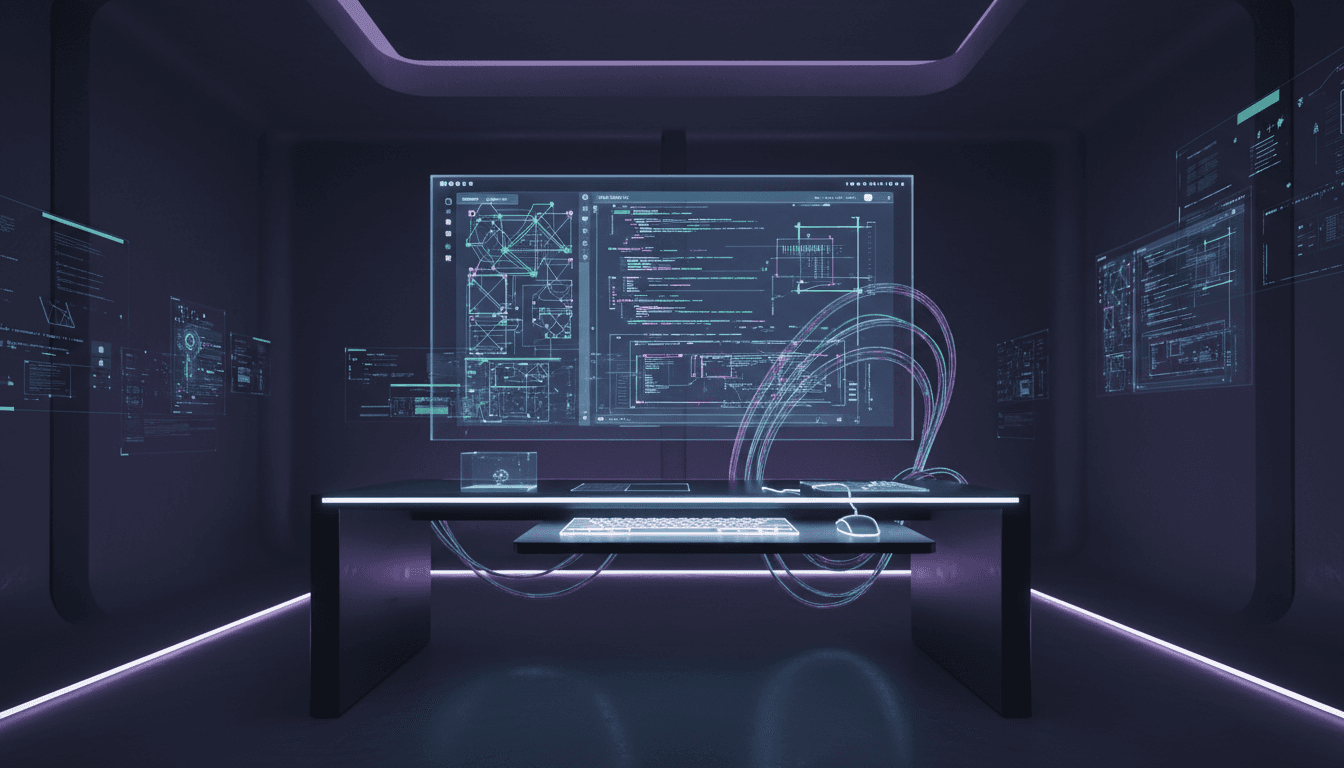
How AI Agents Work
A truly autonomous agent isn't just reacting to isolated commands; it works within a multi-tiered loop that executes four main functions synchronously:
- 1Understanding RequirementsTranslating natural language prompts into structural models, schemas, and prioritized checklists.
- 2Generating Clean CodeProducing scalable frontend components, styling structures, and robust backend logic concurrently.
- 3Connecting External ServicesAutomatically integrating databases, authentication systems (like Supabase), and customized API endpoints.
- 4Instant DeploymentServing production-ready environments to secure cloud hostings without manual configuration.
The Impact on Teams
By offloading the repetitive boilerplates of configuration and interface wiring, engineering teams achieve unprecedented focus. Developers can act as product architects, overseeing larger systemic flows rather than debugging pixel positions or syntax errors.
"The future of software isn't about writing more code — it's about describing better ideas."
This paradigm completely restructures the cost of experimentation. When the gap between design and interactive product is measured in minutes, organizations can run numerous concurrent experiments, directly testing user hypotheses with real working code.
Looking Ahead
As AI agent capabilities deepen, we will see even closer integration between abstract design environments and deployable infrastructure. The next generation of digital products won't just be built with AI — they will be continuously optimized by it, molding to the unique requirements of every individual user in real-time.
- AI Development
- Software Engineering
- Automation
- Product Building
Related Articles
 AI DevelopmentWhat Is AI App Development and How Does It Work?Understand how artificial intelligence is changing traditional software development and enabling faster product creation.Read More
 Startup BuildingFrom Idea to MVP: How AI Helps Startups Launch FasterLearn how founders can use AI-powered tools to validate ideas, build prototypes, and launch products efficiently.Read More
 Design & DevelopmentFigma to Code: Turning Designs Into Functional ApplicationsExplore how AI can transform design systems and prototypes into production-ready interfaces.Read More